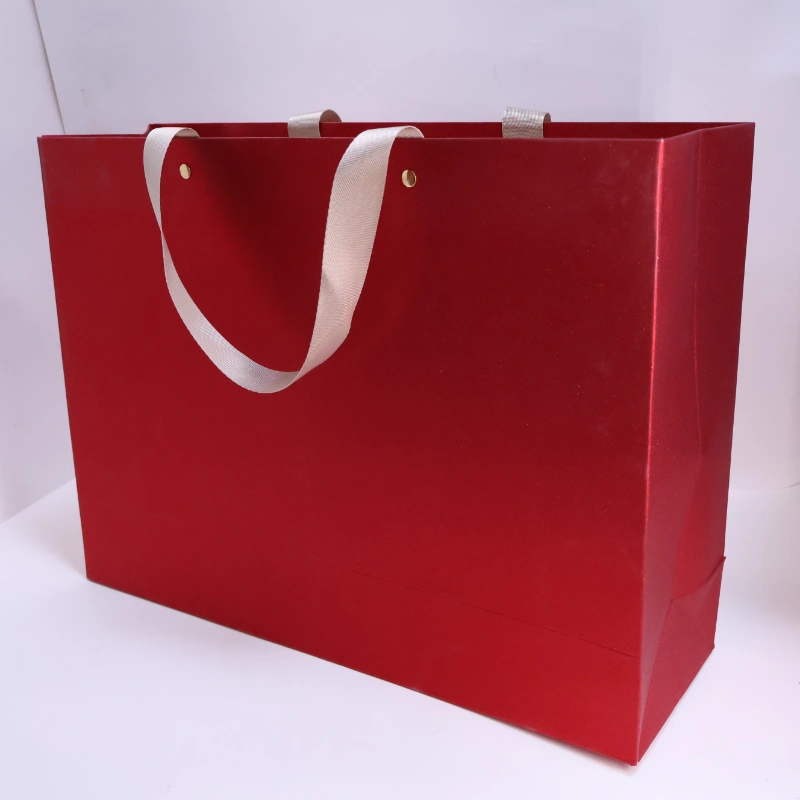
A luxury brand is finalizing the packaging for a new fragrance line. The Paper Tote Bags that will carry the product out of the store must look premium, feel substantial, and survive the customer's journey home. The brand's packaging manager is weighing two options: an uncoated, natural kraft bag with a minimalist print, or a laminated bag with a soft-touch matte finish and a foil-stamped logo. The uncoated bag is cheaper and more sustainable. The laminated bag looks richer and resists scuffing and moisture. The decision is not simply about aesthetics. It affects the bag's durability, its print quality, its recyclability, and its total cost. Lamination is a tool, not a default. Knowing when it is worth considering, and when it is unnecessary, is the key to making a sound procurement decision.
This guide is written for buyers who source Paper Tote Bags for luxury retail, cosmetics, apparel, and gifting applications. We will explain what lamination is, the different types of lamination available, the specific scenarios where lamination adds value, the scenarios where it is not the best choice, and the criteria for evaluating a supplier. We will also provide detailed product parameters from our factory at Taihao (Shandong) Printing and Packaging Co., Ltd. Whether you are specifying a new bag for a product launch or evaluating a change to an existing design, this guide will help you determine when lamination is worth considering for your luxury Paper Tote Bags.
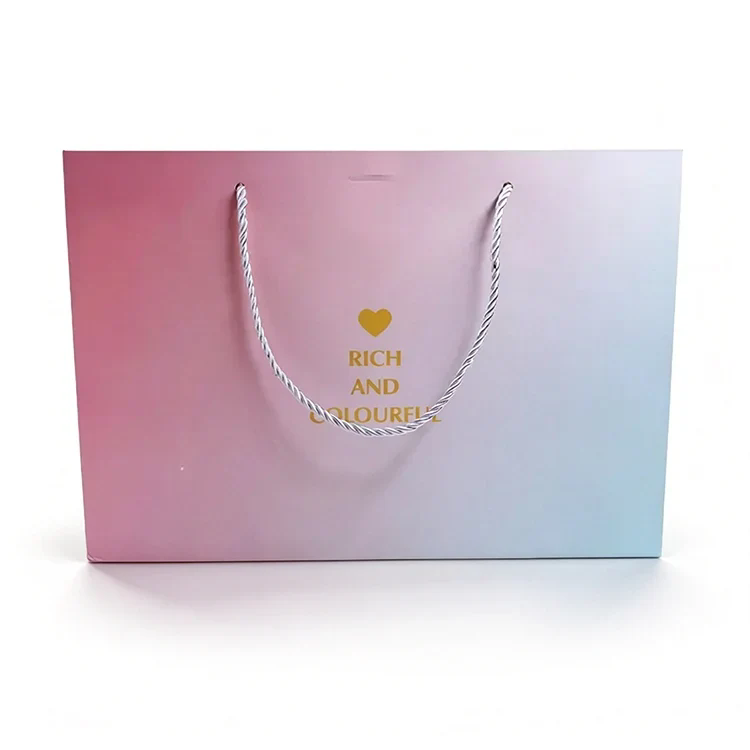
Lamination is the process of bonding a thin film to the surface of the printed paper. The film is typically a BOPP (biaxially oriented polypropylene) film, available in gloss, matte, or soft-touch finishes. The film is applied using heat and pressure, either by a thermal lamination process or by a water-based adhesive. The result is a barrier layer that protects the printed surface from scuffing, moisture, and handling. Lamination also changes the visual and tactile character of the bag. A gloss film increases color saturation and reflectivity. A matte film reduces glare and creates a subdued, premium look. A soft-touch film adds a velvety texture that invites touch. The table below summarizes the effects of lamination on a Paper Tote Bag.
| Effect | Unlaminated Bag | Laminated Bag |
| Scuff Resistance | Low | High |
| Moisture Resistance | Low | Moderate to high |
| Color Vibrancy | Good | Excellent (gloss) or subdued (matte) |
| Tactile Feel | Natural paper texture | Smooth, velvety, or glossy |
| Recyclability | High | Reduced (film must be separated) |
| Cost | Lower | Higher |
At Taihao (Shandong) Printing and Packaging Co., Ltd., our factory offers gloss, matte, and soft-touch lamination options for our Paper Tote Bags. We also offer a recyclable lamination film for brands that want the durability benefits without compromising on sustainability. Our technical team can help you select the right lamination for your specific application.
The choice of lamination finish is a branding decision as much as a technical one. Each finish communicates a different message about the brand. Gloss lamination is bright and reflective. It increases the perceived vibrancy of the print and is often used for mass-market cosmetics, confectionery, and promotional bags. Matte lamination is understated and sophisticated. It reduces glare and creates a smooth, premium surface that is popular with fashion, beauty, and lifestyle brands. Soft-touch lamination has a velvety texture that feels luxurious and is often specified for high-end gifting and limited-edition products. The table below summarizes the finishes and their typical brand associations.
| Finish | Visual Effect | Tactile Effect | Typical Brand Association |
| Gloss | Bright, reflective, high color saturation | Smooth, slick | Mass-market, promotional, vibrant |
| Matte | Subdued, non-reflective | Smooth, paper-like | Fashion, beauty, premium |
| Soft-Touch | Low sheen, deep color | Velvety, luxurious | High-end gifting, limited editions |
| UV Spot | High-gloss areas on matte background | Smooth with raised gloss | Premium, design-led |
At our factory, we produce Paper Tote Bags with all four finishes. We also offer combination finishes, such as matte lamination with a spot UV gloss on the logo, which creates a striking contrast that draws attention to the brand mark. Our design team can advise on the finish that best matches your brand positioning and product category.
Lamination adds real durability value in several specific scenarios. The first is when the bag will be subjected to heavy handling. A bag used in a busy retail environment, where it is loaded, carried, and set down repeatedly, will scuff and abrade if the printed surface is not protected. Lamination provides a hard, scuff-resistant surface that maintains the bag's appearance. The second is when the bag will be exposed to moisture. A paper bag without lamination will absorb water, lose strength, and show water stains. Lamination provides a moisture barrier that protects the bag and the product inside. The third is when the print includes large areas of dark or solid color. Unlaminated dark ink is prone to scuffing, which reveals the white paper underneath and makes the bag look worn. Lamination protects the ink and maintains the bag's appearance. The fourth is when the bag will be reused by the customer. A laminated bag is more durable and more likely to be kept and reused, extending the brand's visibility. The table below summarizes these scenarios.
| Scenario | Why Lamination Adds Value | Recommended Finish |
| Heavy Retail Handling | Scuff resistance maintains appearance | Matte or soft-touch |
| Moisture Exposure | Moisture barrier protects bag and product | Gloss or matte |
| Large Dark or Solid Color Print | Protects ink from scuffing | Matte or soft-touch |
| Customer Reuse | Durability encourages reuse and brand visibility | Soft-touch or matte |
| Outdoor or Transit Use | Protects against weather and handling | Gloss |
At Taihao, our factory works with our customers to evaluate the handling and environmental conditions that the Paper Tote Bags will face. We can recommend the appropriate lamination finish based on the expected use, and we can provide samples for testing. Our goal is to ensure that the lamination adds value where it is needed and is not over-specified where it is not.
Lamination is not always the right choice. There are several scenarios where an unlaminated Paper Tote Bag is the better option. The first is when the brand's identity is built around natural, uncoated, or recycled materials. A brand that emphasizes sustainability and minimalism may prefer the look and feel of natural kraft paper, and lamination would undermine that message. The second is when the bag is intended for single-use or short-life applications, such as a promotional event or a trade show. In these cases, the additional durability of lamination is not needed, and the cost is not justified. The third is when the print design is simple and does not require protection from scuffing. A bag with a small, light-colored logo on a white or kraft background is less prone to visible scuffing than a bag with a large dark print. The fourth is when recyclability is a priority. Laminated bags are more difficult to recycle because the film must be separated from the paper. Brands that want a fully recyclable bag may choose an unlaminated option. The table below summarizes these scenarios.
| Scenario | Why Lamination Is Not Worth It | Better Alternative |
| Natural or Minimalist Brand Identity | Lamination undermines the uncoated aesthetic | Uncoated kraft or white paper |
| Single-Use or Short-Life Application | Durability not needed | Unlaminated bag with basic print |
| Simple, Light-Colored Print | Scuffing is less visible | Unlaminated bag with water-based coating |
| Recyclability Priority | Film complicates recycling | Unlaminated bag or recyclable lamination film |
| Cost-Sensitive Project | Adds cost without proportional benefit | Unlaminated bag with high-quality print |
At our factory, we offer both laminated and unlaminated Paper Tote Bags. We do not push lamination as a default. We work with our customers to understand their brand positioning and their practical requirements, and we recommend the option that best serves their needs. Our goal is to help our customers make an informed decision, not to sell them the most expensive option.
The sustainability and recyclability trade-offs of lamination are a significant consideration for luxury brands. A standard laminated Paper Tote Bag is not easily recyclable in a conventional paper recycling stream because the plastic film must be separated from the paper. Some recycling facilities can handle laminated paper, but many cannot. This means that a laminated bag may end up in landfill even if the brand intends for it to be recycled. There are alternatives. Recyclable lamination films are available that are designed to be compatible with paper recycling. These films break down during the repulping process, allowing the paper fibers to be recovered. Another option is a water-based coating, which provides some scuff and moisture resistance without the plastic film. The table below compares the sustainability options.
| Option | Scuff Resistance | Moisture Resistance | Recyclability | Cost |
| Standard Lamination | High | High | Low (film must be separated) | Medium |
| Recyclable Lamination Film | High | High | High (compatible with repulping) | Medium-High |
| Water-Based Coating | Moderate | Moderate | High | Low |
| Unlaminated | Low | Low | High | Lowest |
At Taihao (Shandong) Printing and Packaging Co., Ltd., our factory offers standard lamination, recyclable lamination film, and water-based coating options for our Paper Tote Bags. We work with our customers to balance the durability requirements against the sustainability goals of the brand. For brands that want both durability and recyclability, the recyclable lamination film is often the best compromise.
Evaluating a supplier of laminated Paper Tote Bags requires a focus on lamination quality, print quality, material sourcing, and sustainability options. The supplier must have the capability to apply the lamination evenly, without bubbles, wrinkles, or delamination. They must have the print capability to produce high-quality graphics that are enhanced, not compromised, by the lamination. They must source high-quality paper and film. And they must offer the sustainability options that meet the brand's requirements. The table below summarizes the evaluation criteria.
| Evaluation Criterion | What to Look For | Why It Matters |
| Lamination Quality | Even application, no bubbles or delamination | Ensures the bag looks premium and performs |
| Print Quality | High-resolution printing, color accuracy | Ensures the lamination enhances the print |
| Material Sourcing | Certified paper, quality film | Ensures durability and printability |
| Sustainability Options | Recyclable film, water-based coating | Ensures the bag meets the brand's goals |
| Production Consistency | Consistent finish across orders | Ensures repeat orders match |
At our factory, we have been producing laminated Paper Tote Bags for luxury retail brands for over a decade. We use high-quality lamination equipment and certified materials to ensure consistent quality. We offer a range of finishes, including recyclable lamination film, to meet the sustainability goals of our customers. We invite you to evaluate us against these criteria and to consider us as your partner for Paper Tote Bags.
The following table provides the key product parameters for our laminated Paper Tote Bags. These bags are designed for luxury retail, cosmetics, apparel, and gifting applications. Our factory can also produce custom bags to meet specific requirements.
| Parameter | Specification Range | Notes |
| Bag Size | Custom (typically 20x25x10 cm to 40x50x15 cm) | Made to order |
| Paper Weight | 120 - 250 gsm | Selected for strength and print |
| Paper Type | Art paper, kraft paper, recycled paper | Selected for brand positioning |
| Lamination Finish | Gloss, Matte, Soft-Touch, UV Spot | Selected for brand image |
| Lamination Type | Standard, Recyclable Film, Water-Based Coating | Selected for sustainability goals |
| Handle Type | Paper twist, cotton rope, ribbon, die-cut | Selected for design and strength |
| Printing Method | Offset, Screen, Digital, Foil Stamping | Selected for design complexity |
| MOQ | 1,000 pieces | Negotiable for large orders |
| Lead Time | 2 - 4 weeks | Depends on quantity and customization |
At our factory, we manufacture our Paper Tote Bags to meet these specifications and more. We can customize the size, paper weight, lamination finish, and handle type to suit your specific requirements. Our quality control system includes inspection of raw materials, in-process inspection, and final inspection before shipment. Our goal is to provide our customers with high-quality Paper Tote Bags that meet their brand and performance needs.
Question 1: When is lamination worth the extra cost for a paper tote bag?
Answer: Lamination is worth the extra cost when the bag will be subjected to heavy handling, moisture exposure, or when the print includes large areas of dark or solid color that are prone to scuffing. It is also worth it when the brand wants a premium tactile finish, such as soft-touch, to reinforce its positioning. If the bag is for single-use, has a simple light-colored print, or is intended to emphasize a natural uncoated aesthetic, lamination may not be worth the investment.
Question 2: Is laminated paper recyclable?
Answer: Standard laminated paper is not easily recyclable because the plastic film must be separated from the paper fibers. However, recyclable lamination films are available that are compatible with the repulping process. Water-based coatings offer a middle ground, providing some protection without the plastic film. At Taihao (Shandong) Printing and Packaging Co., Ltd., we offer all three options so that our customers can balance durability against recyclability.
Question 3: What is the difference between matte and soft-touch lamination?
Answer: Matte lamination has a smooth, non-reflective surface that reduces glare and creates a subdued, premium look. Soft-touch lamination has a velvety texture that feels luxurious to the touch. Both are popular for luxury brands, but soft-touch is typically specified for high-end gifting and limited-edition products, while matte is more common for fashion, beauty, and lifestyle brands.
Question 4: Can lamination be applied to only part of the bag?
Answer: Yes, spot lamination or spot UV can be applied to specific areas of the bag, such as the logo or a design element. This creates a contrast between the glossy and matte areas, drawing attention to the brand mark. Spot UV is typically applied over a matte lamination base for maximum effect.
Question 5: How does lamination affect the printing process?
Answer: Lamination is applied after the printing process. The print is produced first, and then the lamination film is bonded to the surface. This means that the print quality must be high before lamination, as the film will not hide defects. In fact, gloss lamination can accentuate print imperfections, while matte and soft-touch lamination can mask minor defects. Our factory uses high-quality printing equipment to ensure that the print meets our standards before lamination is applied.
Lamination is worth considering for luxury Paper Tote Bags when the bag needs protection from handling and moisture, when the print design requires a durable surface, and when the brand wants a premium tactile finish that reinforces its positioning. It is not worth considering when the brand's identity is built around natural uncoated materials, when the bag is for single-use, or when recyclability is a priority. The key is to match the lamination decision to the specific requirements of the brand and the bag's intended use. At Taihao (Shandong) Printing and Packaging Co., Ltd., our factory offers a range of lamination finishes and sustainability options to meet the needs of luxury brands. We work with our customers to select the right option for their specific application.
Whether you are specifying a new bag for a product launch or evaluating a change to an existing design, we invite you to contact us to discuss your requirements. We can provide samples, technical data, and cost estimates. Our commitment to quality and customer satisfaction has made us a trusted partner for luxury packaging projects around the world.
Contact Taihao (Shandong) Printing and Packaging Co., Ltd. today to discuss your Paper Tote Bag requirements and discover how our lamination options can enhance your brand and protect your product.
-